Does Populism threaten democracy? With Marc Froese and Frank Furedi
Marva Khalid 00:01
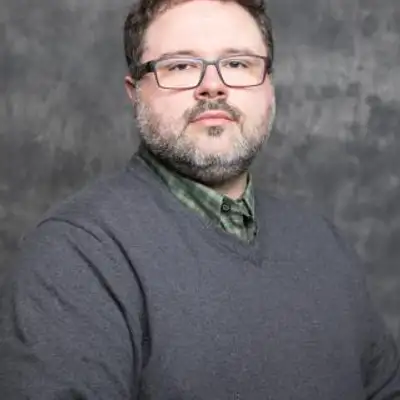
Hello and welcome to the second series of The Bridge: A Disagreeing Well Podcast from University College London and UCL Students' that tackles hotly debated issues and provides us with tools and techniques to help us disagree about them better. I'm Marva Khalid, a UCL student and co-producer of The Bridge. I truly believe that conversation is the catalyst for change, which is why I want to figure out how we can have tough debates that build mutual respect instead of just driving us further apart. A question for today, does populism threaten democracy? Populism - it's one of those words that gets thrown around but is never really explained, but in researching this episode, I realised I have had direct experience of it. I grew up in Pakistan, I watched Imran Khan go from Cricket hero to Prime Minister by telling ordinary people that the elites had stolen their country. Then the establishment removed him, jailed him, tried to erase his party and his supporters voted for him anyway. Now I'm in the UK and seeing it from a different angle. Reform UK, blaming immigrants, The Greens, pushing eco-populism, Jeremy Corbyn starting a new party, and the democratic socialist just became Mayor of the New York City. So it seems that populism can look like hope, but it can also look like institutions being torn apart. So what is it and does it threaten democracy? Joining us to discuss this are Marc Froese, Professor of Political Science at Burman University in Canada, and author of Has Populism Won the War on Liberal Democracy?
Marc Froese 02:06
You can't just assume that populism is just the little people standing up to entrenched elites. There's elites using the tools of democracy against democracy.
Marva Khalid 02:18
And Frank Furedi Emeritus Professor of Sociology at the University of Kent and Author of In Defense of Populism.
Frank Furedi 02:27
I would want us to look at democratic issues that underpin the whole debate around populism, because if you look at statistics, the number of people that are scared to express their views has been increasing.
Marva Khalid 02:40
We're also joined by our resident UCL mediator, Dr Melanie Garson. Melanie, how are you feeling about today's discussion?
Melanie Garson 02:49
Well, hi Marva, today's discussion is going to be an interesting one. It's a big topic, and we've got two experts with very strong stated opinions, you know, on books to boot. And that makes it even more interesting, because when they've got to defend a position that's very much publicly out there, they can sometimes be challenges in, you know, moving towards each other, finding agreement within those questions. So, I'm super looking forward to seeing how that plays out. What about you? What are you looking forward to today?
Marva Khalid 03:25
Well, I'm curious to see how this unfolds, especially given how divided people are on this issue. So, let's get into the discussion, shall we? Let's do that. Marc, does populism threaten democracy? Can you briefly outline your position on that.
Marc Froese 03:42
Okay, well, this question of, is populism a threat to democracy? I feel like I should, I should say yes, it's a threat to democracy. And, you know, Frank will say, no it's not. And we can have that kind of clash of the titans. But I don't see it quite like that, I think that populism is a method. It's a way of framing messages. It's a way of getting people's attention, and in that it can threaten democracy, yes, especially if it's designed to rage farm, to create polarisation, to create difference, where differences are actually smaller than we see. But it can also be protective of democracy. It can be a way to rally people against external or internal threats. I would argue that today, coming out of the right a lot of those threats are exaggerated, or if not exaggerated, they are framed in a way to enhance fear, enhance insecurity and to drive people towards a particular electoral outcome. So, in that way, I think we could say that, yeah, that populism can threaten democracy.
Marva Khalid 04:49
And Frank, can I ask you to do the same, summarise your position on our question?
Frank Furedi 04:55
Well, my position is that there is such a thing as populism, it represents democracy in action, because almost every single democratic right that's ever been won came from below. It's never been a gift from above, and populist movements in their different forms, have succeeded in making democracy a reality in the modern era. I think that the problem with our discussion is that there is no such thing as populism in a kind of definitive way, because virtually nobody that I know calls themselves populists. The word populist is used by people who hate populism rather than the people who are called populists. So it's not a term of self designation, but it's a term of pathologisation. And one of the things that I find really quite interesting and troublesome is that if there is a threat to democracy, it's the anti populists. The anti populists call into question the moral capacity of people to make decisions for themselves. It's the anti populists who have such negative views even about the word the people, and who imagine that somehow experts and educated people are in a better position to know what the world needs than my neighbour or your neighbour, who for some reason have never had a university education. So, I think it's a perverse question to ask when it's the anti populists who have systematically threatened democracy throughout the ages.
Marva Khalid 06:26
Thank you both. You both clearly see populism as significant, but you're coming at it from very different angles. Melanie over to you to lead us through the discussion.
Melanie Garson 06:37
Well, thank you for that Marva and thank you both, Marc and Frank, for your opening point. Before we get stuck into the conversation, which feels a bit like a joke, like a sociologist and a political scientist and a media to walk into a bar. But I want to just ask, um, have you two ever been in conversation before?
Frank Furedi 06:59
No.
Marc Froese 07:00
No.
Melanie Garson 07:00
First time and but your very academics. How much do you know about the other, or how much did you try to know about each other before you came on today?
Frank Furedi 07:12
Well, I've written chapters on people who don't like populists.
Melanie Garson 07:16
So you've written about Marc.
Frank Furedi 07:18
Yeah, because I think anti-populism is the dominant narrative in the literature. You very seldom get people writing books about defending populism. And therefore, for me, was very interesting and very important to understand where people who don't like populism are critical come from, because I don't want to caricature them. I want to really understand why it is that, as far as they're concerned, populism represents such a threat to their world?
Melanie Garson 07:47
Well, we hopefully will come back to that, but Marc how much research did you do into Frank before today?
Marc Froese 07:54
I had encountered Frank's work when I was in grad school, actually, my work at that point was on the World Trade Organisation, so I encountered Frank's work in graduate seminars, but not necessarily used it in my own work. I guess you could say he kind of fell off my radar for many years. I have also encountered a number of academics, often European, frequently continental European, and in fact, one here in Canada who's Hungarian, who has a rather similar approach to populism that Frank does. So, I feel like I can talk to him productively, yeah.
Melanie Garson 08:28
Well, I think that's really interesting, because one of the things we often had to explore is thinking about preconceptions. And you said, Frank, you know you want to know more about where Marc is coming from. I want you to ask Marc one question that's not related to the topic.
Frank Furedi 08:48
Yeah, so the question I would ask Marc is, to what extent do you think that an event like Brexit was represented democracy in action, or what to what extent it represented, its very opposite?
Marc Froese 09:05
Oh, I think democracy in action, absolutely, yeah. I would not characterise myself as an anti-populist. I would say that populist message framing is a tool. It can be used to tell the truth, but it can also be used to lie, and that's kind of what I'm particularly concerned with. So, I'm not so much anti-populism as I am pro liberal democracy. I do think that there's a great deal of value in a kind of representative democracy in which we sit down together and debate these things, argue about them, fight about them, possibly in ways that are very productive and, you know, civilised, like we're doing right now. And possibly in ways that are less so I'm thinking like Twitter or X, or social media. I also think that's valuable too, people sit down and hash out issues with a lot of snark and sometimes a lot of anger, and sometimes with all those populist message frames. So yeah, I guess I would say not anti-populist, but pro, a kind of politics in which we can talk about this stuff.
Melanie Garson 10:05
Thank you. Marc. I want you to take the opportunity to ask Frank one question you would like to know, maybe not related directly on the topic.
Marc Froese 10:13
Okay, something completely off topic. Frank, when did you retire and what made you decide to take emeritus status?
Frank Furedi 10:24
I retired, I think, about seven or eight years ago, and the reason why I decided to take emeritus status is because my big love in life is writing books. I had about four or five book projects I wanted to write before I dropped dead, and so I decided that the best way of making sure that I get as close as possible to my objective was to essentially gain complete control over my time. As it happens, I love teaching as well, but I still managed to give lectures, you know, sort of in different universities, so I can have the better balance than I had previously.
Melanie Garson 11:02
Well, that's great, and actually it's a good that you brought up objectives, because both of you have alluded to different aspects of the populist populism conversation. So, you've already said you've got some questions for Marc. You said you want to understand a little bit more about why and how people like Marc come to their conclusions and their decisions. So, frank. How would you like to ask that question to marc?
Frank Furedi 11:34
I think the way I would pose the question is this, I don't understand why a lot of intelligent people who write about populism have this kind of double standard. So, for example, Mark has just said earlier on that populists can tell the truth and they can tell lies. It seems to me that we don't apply that criterion to liberals and to normal conservatives, because we know full well that they too can tell the truth. And for some reason, movements that are called populist are essentially treated to a very different standard of judgment than any other movement, and any flow, any mistake that they may or may not make, are seen as their defining feature, rather than as something else. And the question for me is, do you not see that there's this double standard at work in the way that populism is treated compared to any other kind of movement?
Marc Froese 12:31
Sometimes there is yes, and I would argue that it's often biased by one's own sort of political position. So you'll often hear people on the left harshly critique right populists and people on the right defend populism as a sort of a mode of speech of the true people and critique left populism harshly. So, yeah, there's definitely that element of team sports in the way that people approach who they believe to be good populists and who they believe to be bad populists, or what populist messages they believe to be appropriately framed or inappropriately framed? Absolutely, yeah, that's true.
Melanie Garson 13:06
Frank, did that answer your question?
Frank Furedi 13:10
I think it did partially. But the only point that I would make is that when you're looking at the media or the academic literature on populism, you will find that the language that is used is distinctly ill tempered. So even I, because of my affinity populism, I get called member of some far right. Sometimes I get called fascist, all kinds of names that bears no relationship to the way that I see myself. Because if I was a fascist, I would declare that I'm a fascist, I wouldn't hide it. But there seems to be this notion that, for example, if you voted for Brexit as I did, then ipso facto, no, you must be a racist, you must have some racial motivation that has led you to that kind of conclusion, rather than basically accept on good faith, what I say I voted for Brexit because I believe in popular sovereignty, and I believe in the importance of democratic decision making by the people within their own society. That judgment, that harsh judgment, runs so deep that it almost makes it impossible to have a grown-up discussion of populism most of the time, because populists are already judged guilty even before they open their mouth.
Melanie Garson 14:22
Marc, have you experienced anything similar in relation to how you are judged on your position in the conversation? Is this something that you found as well?
Marc Froese 14:34
Yeah, of course, yeah. In fact, about a few months after our book came out, Daniel and I were criticised in the national press in Canada, in a opinion piece in The Globe and Mail in which two members of the NDP, who are Canada's left leaning party, said, You guys don't understand populism, it can be a progressive force for positive good in the world and for change. And we said, well yeah, of course, did you read chapter one? We talked about this, we talk about left and right populism and about this mode of message framing, but they've said, no, no, like you're being harshly critical of progressive populists, and you're missing the fact that populism is a progressive movement that has been twisted and deformed by a right that is looking to use the tools of progressive people against democracy. And of course, that's not how we had seen it. But yeah, we've gotten that same argument, but coming from the other side, it sounds like Frank is getting criticised from the left, i'm getting criticised from the left as well. I've gotten criticised from the right as well on social media. Yeah, a lot of this comes down to what people who don't necessarily study populism would call polarisation. This idea that you have to have good and bad, and right and wrong, and the true people and the evil elites. In many ways, that sort of polarisation has driven conversations everywhere.
Melanie Garson 15:53
Interesting, diagnosing a little bit of where you think this is coming from. Frank from your perspective, and having heard Marc, where do you think that this is coming from, this attitude towards you and your writings on populism?
Frank Furedi 16:10
I think fundamentally it comes from the fact that we live in an era where a political discussion and political debate is very much seen as no longer that important. I think free speech is valued far less than before. A lot of people seem to think that there is no point defending their positions against people that are not like themselves, and the tragedy of our times is that in the university environment, you have this complete polarisation occurring where people live in their bubble and regard anybody that's not part of their team as somehow morally inferior. You know, I remember a time because I've been teaching now on and off for 4445 years. I remember that when I was a postgraduate student, or when I started teaching, I could go to a bar with friends or acquaintances who were from the left and from the right, and we would sit down, we'd have a drink, we'd joke, and we'd argue very hard against each other, but we could still go dancing afterwards. That was not a problem. When I think of my son's generation, it's completely unthinkable that he would hang out with people who are not like himself, and therefore his whole circle of people are more or less mutually reinforcing. And when you become like that, you lose an understanding and sensitivity of where other people come from. And that's important, because one of the things that we know from human experience is that unless you are prepared to debate and argue, hold your position very strongly, but still argue with somebody, you're not going to really, number one, develop your own ideas, because you're never under pressure to develop those ideas. And number two, you will never learn from the experience of others, because the truth is, is that even opponents you think are idiots, who you don't think very much of, have got something that has made them think the way they do, and if you can understand why they think the way they do, then that's a very important learning experience that you don't really have anymore.
Melanie Garson 18:10
Marc, I see you nodding there. What's your reflections from what you're hearing from Frank?
Marc Froese 18:16
Yeah, what I will disagree with is I would say I think people do think that free speech is very, very important, but I think what happens is they begin to think it's so important that we have to protect it from those people who want to destroy it. And so rather than thinking of free speech as a thing that we all do together, a way of thinking and reasoning, together, of arguing, sometimes fighting, sometimes coming to a consensus, maybe it's even a compromise, something that they have perhaps not been trained to do. It's what I would actually argue, the basis of this, the foundation of this is not that we don't value the tools of liberal democracy, so I don't think we've been trained in them. One of the things your podcast is doing, and one of the things that I think we have to be doing in the academy is training people to disagree well and also to hold unpopular opinions, and that's okay, but not to the extent that the unpopular opinion is simply a thing that we do, because as a debate society, it's important to have an edgy position, right? I think there's definitely an element of that that I see, especially in American politics, where you'll actually see people kind of like forming national policy around what's basically a debate society position. So, I'm not suggesting that either, but I am suggesting that that kind of tug of war, that tension, that stress of disagreeing, well, I think, is entirely essential to what we're doing here in democracy. And as a result of that, we have to teach people how to both value open debate and how to do it. And that's something I think that we don't we don't teach very well.
Melanie Garson 19:44
Frank, what would you like to change about the question, does populism destroy democracy? We're coming to that place of having that discussion and disagreement. If you could change one thing or several things in the conversation about it. What would that be for you?
Frank Furedi 20:05
What I would really like to see happen is that, instead of just talking about populism as a brand or as something, that we all know what we're talking about, if you could look at what the underpinnings are of this moment that we live in when there's a demand for new parties, new movements throughout the western world, and that essentially means that we have to rethink what we think about democracy and freedom. Because one of the things that I think is really not recognised for a lot of people who support populist parties, what drives them to that conclusion is because they feel very often that they are not free to express themselves. I disagree with Marc a little bit on free speech. I think one of the astounding thing in our world is the large number of people that self-censor. If you look at statistics, the number of people that basically are scared to express their views, has been increasing, almost exponentially over the last 10 years. That's what surveys show both United States and also in Europe. And I think that's a very good reason for that, because freedom, even liberal freedom, in its fundamentals, tolerance, which is a very important liberal ideal are not really valued by our society. Whenever I hear people talk about tolerance, they always say, I believe in tolerance, but, and it's what comes after the but is really important. Or people say, I believe in free speech, but, and it's the but, the qualification on free speech that is really very, very important. So, I would want us to look at democratic issues that underpin the whole debate around populism. Because at the end of the day, unless we take democracy really, really seriously, then none of the discussions about populism really means very much. It just becomes something that is really the symptom of the issues at stake, rather than its fundamental aspects.
Melanie Garson 22:03
Thank you for that. Did you raise something really interesting in the sense that perhaps this is less of a question about populism and more about a question of how people value democracy, or the understandings of democracy. Marc, what did you hear from what Frank has said that sort of jumped at you, and how would you respond to it?
Marc Froese 22:23
Actually, I have a couple of things I could say. One of them is we sometimes assume that what's happening is a grassroots demand for new parties, new movements, new ways of expressing ourselves. And I think some of that is definitely true. There's also another element of that, and that is that right wing parties are using the tools of grassroots politics to stay in power. So, you actually have, especially in the American context, an attempt to create what's a fake grassroots movement in order to push, sometimes anti-democratic or just pro-capitalist values. There's a book that was come out recently that showed that a lot of right wing parties use populism, not because they're populist themselves, but because it's a tool to stay in power. I think you saw that in Hungary, where you did have somebody who came into power genuinely popular, who eroded elections, eroded the democratic potential in Hungary, and ended his career using these tools to kind of stifle dissent and enrich himself and his friends. You can't just assume that populism is just the little people standing up to entrenched elites. Is there an element of that, sure, there's also an element of elites using the tools of democracy against democracy. I think that's a really important thing we have to consider.
Melanie Garson 23:39
Frank the tool of elite using populism as a tool of democracy against democracy. How does that sit with your current thinking on populism?
Frank Furedi 23:50
Actually, not at all. The interesting thing about populism today is that it is demand led if you look at every Western country, there's a demand for new parties. The old parties have unravelled, and therefore there's what I call the populist movement, where people are looking around for movements that take themselves seriously and take people seriously. There's millions of people that want to be part of the conversation, and it seems to me that it may well be the case that the parties that emerge are manipulative, that's not because they're populist, that's just because they're trying to manipulate populism. You see, who is a populist politician when Trump would deny that he's a populist, as he would Farage in Britain, he doesn't consider himself to be a populist. Orbán in Hungary self-consciously rejected the label populist years ago, and he describes himself as a Christian democrat. It's the anti-populist movement that calls these people populist, but in reality, there is what I call the spirit of populism, which is very infectious at the moment, which is quite independent of any political party or any individual, and whether that spirit is manipulated or is harnessed for positive ends is a different story altogether. Can I just say that a point about Orbán and Hungary, which I think is also a myth, it's always been accused of being anti-democratic and thwarting democracy, and yet, in elections after election, over the last, I don't know, 5-6 years, the democracy has won, despite all the claims that he's going to prevent the opposition from winning, that he's going to thwart this and that way. He very graciously accepted defeat in a record amount of time, which basically shows us that a lot of that hostility to Hungary, that propaganda against Hungary was entirely based on fiction rather than on reality. I feel strongly about that being Hungarian, the government has a lot of things that I don't agree with, but the way in which they were, in a sense, pathologized and criminalised in the West, tells us that populism is used very much as a tool of polemic, rather than as an objective tool of analysis.
Melanie Garson 26:02
So populism is a tool of polemic, rather objective analysis. Marc, you said earlier, populism as a methodology. Do you see a way that those sit together?
Marc Froese 26:15
Yeah, absolutely, it's a polemical tool, right? That's the entire nature of that message frame. Just because remember, the populist message frame says it's we, the people against the evil elites. Now, sometimes that's absolutely true, and sometimes that's a way to disguise the fact that you're an elite yourself, using that tool we see, for example, most of the leaders who we would label as populist in the world today, Donald Trump, Viktor Orbán and others as people who are elite themselves. Donald Trump is perfect for that, right, a kind of man who's very rich but comes across as a man of the people and emphasises his popular bona fides. I feel like I want to throw a bomb, just because I think this is a moment to do it. I think Frank will appreciate that. Previously, he said, you know, we're in this moment when people self-censor so much, now I mean, as an individual, I kind of agree with what Frank is saying, but as an academic, I want to say something that I've kind of said in public before, and that is, maybe we don't self-censor enough. Maybe one of the problems is we don't know how to speak in public. Because I know if I went out for a drink with Frank and we're sitting in the pub and we're chatting about our perspectives, we would say all kinds of things, and probably both of us would say things that would be somewhat hyperbolic in order to get a rise out of the other, to kind of test each other's perspectives, right? When you do that in public and you don't know what you're doing, or you don't know how to do it well, or you just don't care, you come across as somebody who is saying things just to cut through the static of modern life. We see that right now in Alberta, where we have a separatist movement who says things like, you know, there are too many immigrants. And part of it is because there is a sort of anxiety of a place that used to be very white becoming less so. And part of it is a way to cut through the static of modern life and try to get people's attention by being provocative, by being angry, by using both rage and shock value to make people see and hear something that you want them to pay attention to. So, I would argue that probably our public life in the future will be much improved if we all learn how to speak in public, how to represent what we really think in public. Maybe how to throw bombs judiciously. I hope I'm throwing a bomb judiciously, but also maybe how to self-censor when it's not appropriate to say that kind of thing in public.
Melanie Garson 28:32
Well, thank you. I think Frank, at beginning of the conversation was saying you wanted to get a little bit more. Frank. What are your thoughts there?
Frank Furedi 28:40
Well, I mean, the way that I look at it is that we have to be mature and grown up and be able to deal with all kinds of arguments, no matter how much they hurt, how painful they are, because language and the exchange of ideas is one of the fundamentals on which a civilized democratic society depends. Now it's inevitable that in the course of discussion and debate. You're going to have people using coarse language, they are going to say words that you and I might find offensive, but I would rather know what people are actually thinking, what are the sentiments that drive them, than to basically have them driven on the ground, which is pretty much the case at the moment. Just to give you an example, I've been one of the few people that has been arguing against Holocaust denial, and the reason why I argued against it is because I think Holocaust was a very important historical event, and unless we talk about it openly, all that we do is be create scepticism by section of society say, well, they must be hiding something if they're not allowing us to criticize a dominant version of the Holocaust, and lo and behold, what we're seeing today, partially because of these laws, the number of people that now argue that Holocaust has never happened has been rising, rising and rising. So, it seems to me that from the point of view of a matured political development. And we need to be adult enough to allow people to express themselves in accordance with their inclination. And it seems to me that what we have at the moment is the use of censorship in a very manipulative way, because it's often used as a way of saying, oh we're just protecting minorities, or we're just protecting people. The reason why we must censor or not allow these words to be said is because they offend certain individuals. And if you look at the university system, I still remember when trigger warnings did not exist. I still remember when I was first debating and saying that once you have trigger warnings in one area, it's just going to expand everywhere else. And now it's become totally normalized. And it basically means that young students reading English literature, fiction for the first time are told that this particular novel is a product of its time. You might find it traumatic, you might find it troublesome, instead of letting the young students to learn for themselves what to get out of the novel and to make up their own mind, which is what the journey of studying literature is all about. You already tell them you're more or less you're framing for them how they should be reacting to that particular novel. And I think that infantilizing dimension of censoring speech is something that should not be underestimated, how important that is, and it makes it impossible for us to have the kind of discussion we're having at the moment, because once you give way to censorship even a little bit, then it's only a matter of time before it expands and expands and expands.
Melanie Garson 31:30
Well, I see Marc nodding, and I'm sure there's a lot to respond to, and I know there's a whole other podcast episode just coming out of this conversation here that we might have to get back to. Sadly, I have to draw this to a close, but I want to ask you for one final, very quick point, thinking about your vision for creating different understandings in relation to populism and democracy. What do you think stopping getting these more nuanced understandings of populism out into the wider conversation?
Marc Froese 32:10
I mean, maybe nothing. Maybe this is what we're doing right here, right now, in social media, in public speaking. I think with some of the things that stop us from having some of these conversations at a kind of level of popular culture is that we don't like to sit and listen in long form to people debate. We like to think in terms of snippets and sound bites and a little bit of this and that we like to be triggered, right? We kind of like to be titillated, so you could argue that it's simply our kind of media environment that stops us from having these longer conversations, but I don't conversations. But I'd argue maybe not even the case. I'm even changing my mind as I say that I would say that what's maybe stopping us is nothing, it's just us. We have to be having these conversations, we have to keep on having them. I agree with Frank, you know what? When I talk to a lot of people, like separatists in Alberta, and even for the further right, I agree with them and the fact that they believe that they want to hold on to democracy. They want that of freedom to debate. They see the left as being censorious, and they see themselves as being champions of free speech, to which I would say sometimes, sometimes they censor in different ways. Sometimes it's just a matter of team sports and shutting down the other side. And I would argue that some of this is polarisation, and that attempt to shut down the other side by any means necessary, whether that's gerrymandering voting districts or shutting off their microphone. We all have to learn how to speak and disagree better, and what we're doing here is what's helping that to happen.
Melanie Garson 33:33
And my final question to Frank, did you learn a little bit more about what generates people are like Marc's viewpoint?
Frank Furedi 33:41
I think I probably did. And the reason why this conversation is important and useful for me is because when you have a situation where neither political sides consist of a bunch of angels, but that there are people who are supposed to be on my side, who are often complicit in perpetuating precisely the bad things they accuse others of, it's important to acknowledge that. So, for example, it was very important to acknowledge that despite the Trump administration's what I thought was correct criticism of censorship in Europe and correct criticism of censorship in American University, despite their characterise, they themselves then become censorious in their behaviour. And I think that what's important is that people like ourselves are equally critical of an expression of a censorious impulse, whether it's from one side or another, and not have a selective attitude towards such crucial issues as freedom and censorship. And I think at the moment, we are a small minority. I know I got friends on amongst people who usually are critical of what I'm saying, but nevertheless have the integrity to see the problems on their side. And I think that similarly, if I'm a man of integrity, I got to adopt the same attitude. It, and same standards, same expectations towards people on my side as I do elsewhere. And if you somehow create groups of individuals who are committed to that sense of integrity in public debate and public discussion, I think that would be a really important contribution to public life in Britain and elsewhere. I just hope that the younger generations are going to want to have a chance to express themselves fully and openly and engage in this kind of discussion, not as a special one off, but as something that's part and parcel of their everyday life.
Melanie Garson 35:39
Well, as I said, we could keep on talking this out, but I'm going to hand back to Marva. Marva.
Marva Khalid 35:47
Thank you, Melanie, I think it was a very interesting discussion, especially how it led to a conversation on freedom of speech and public speaking. Marc, what will you take away about disagreeing well, around this issue?
Marc Froese 36:00
Well actually I think talking to Frank helped me to understand a colleague that I have, and she has said a number of the things that Frank has said, and sometimes I kind of questioned where she was coming from on social media, and I actually feel I understand her a little bit better from talking to Frank.
Marva Khalid 36:18
Thank you. Frank, same question to you?
Frank Furedi 36:21
Well, I think it seems to me what I've learned, and this is usually what happens when you argue a little bit, and you did debate a little bit, is I learned that I got to get my arguments clearer than is the case at the moment, because I think that sometimes what I said did not hit the nail on the head, and if I'm going to be an effective defender of populism, I'm going to have to become much better than I'm at the moment.
Marva Khalid 36:48
Marc and Frank, thank you very much for your time today.
Frank Furedi 36:51
Thank you
Marva Khalid 36:57
So Melanie, we have taken a moment to reflect on the discussion we have had. How do you feel the disagreeing went and how did your techniques play out?
Melanie Garson 37:08
Well, that was a really intense and thoughtful discussion, and it played out very much how I hoped it would play out. If you noticed my leading question was really before they got into the debate, to try and investigate how much they knew about each other, what were their preconceptions, what were they coming to the conversation with? Because often that can be a barrier to conversation. And actually, just taking a little bit of trying to investigate that, to label it for them to, you know, notice how much influence what they're carrying to the table, get up to label it and put it aside, actually led to a really productive conversation. It was super interesting to find out that Marc had read Frank's work, and that Frank had written about Marc to a point. So, to get her to label it, put that aside a little bit. Make that history almost history, and actually focus on the subjects, led to a very interesting conversation. And the second thing that I, you know, worked on with them, is also trying, a little bit of, actually, me, to diagnose a problem. We got into some really interesting questions then about, is this a problem with democracy? Is this a problem with free speech? Is this a problem with censorship that underpinnings are really trying to dig into those underpinnings. So, for me, the super-rich conversation that I hope everyone will enjoy listening to as much as I enjoyed being part of it. What about you? What did you take away from it?
Marva Khalid 38:33
What I'm taking away is that disagreeing well isn't about finding common ground. It's about being able to hold the disagreement without turning it into contempt. I liked how they were both very passionate about this topic. The talk about freedom of speech was interesting for me because it's believed that the anti-populists believe that populism is just like telling a bunch of lies, and anti-populists don't want those lies to come out, don't want people to have that freedom and speech that was interesting for me.
Melanie Garson 39:06
I'm glad that you took that value out of it, because there was a lot that they dug into and really managed to come from very different viewpoints, but really investigate those topics together.
Marva Khalid 39:19
Yeah, so it was a heavy discussion, and I think it could go on and on.
Melanie Garson 39:23
Thank you Marva.
Marva Khalid 39:25
Thank you Melanie. Thank you to our guests, Professors, Marc Froese and Frank Furedi, and to you for listening. We hope you enjoyed the discussion and picked up some tips for disagreeing well. If you have, please let us know how you use them. You can drop us a line at podcasts@ucl.ac.uk. You can find out more about UCL's Disagreeing Well campaign on the UCL website, or follow UCL on LinkedIn, Facebook and BlueSky using hashtag #UCLDisagreeingWell. Please do subscribe wherever you receive your podcasts, to access earlier and forthcoming episodes. And a final thanks to Students' Union UCL and the UCL Podcast Team and to Research Podcasts for their production support.
Creators and Guests