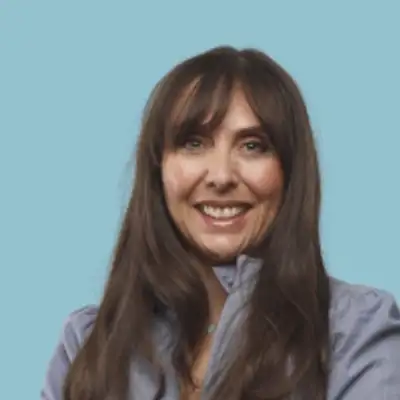
10 years on from Brexit – is it time we rejoined the EU? With Madeleina Kay and Peter Heaton-Jones
Diego Lacheze-Beer 00:01
Hello and welcome to the second series of The Bridge, a Disagreeing Well podcast from University College London and Students' Union UCL that tackles hotly debated issues and provides us with tools and techniques to help us disagree about them better. I'm Diego Lacheze-Beer, UCL student and co-producer of The Bridge, and I'm here to find out how we can have conversations that lead to understanding and mutual respect, rather than frustration and friction. Our question for today, 10 years on from Brexit, is it time Britain rejoined the EU? On the 23rd of June, 2016 the UK voted to leave the European Union. 10 years on, opinion on this decision remains sharply divided. Some see this past decade as proof that Brexit was a mistake, while others argue that the UK is only just beginning to realise its potential outside the bloc. Major political parties have now committed themselves to rebuilding a relationship with the EU, with the Greens and the Liberal Democrats supporting a return to full membership. The question of whether to rejoin involves practical considerations on things like trade, immigration and regulation, but the implications run deeper to issues of democratic legitimacy, UK sovereignty and international reputation. Joining us to discuss this are Madeleina Kay, artist, campaigner, Youth Engagement Officer for the Young European Movement, and a previous winner of Young European of the Year.
Madeleina Kay 01:37
Borders are cruel, mothers that are having to raise their children like they're a single mother because their partner cannot live with them in the UK, I don't want to be part of a society that treats people like that.
Diego Lacheze-Beer 01:47
And Peter Heaton-Jones, a former Conservative MP now working in public affairs and government relations.
Peter Heaton-Jones 01:54
Nothing that Madeleina describes, which I absolutely take on board as being problems and issues, none of that would be solved by seeking to rejoin the EU.
Diego Lacheze-Beer 02:04
We're also joined by our resident UCL mediator, Dr Melanie Garson. Melanie, how are you feeling about today's discussion?
Melanie Garson 02:11
Well, goodness, Diego, it's going to be a really interesting discussion today from my perspective, in some ways, it's a little bit like you and I sitting here. We've got a generational difference coming to this, I'll be interested to see where the feelings come into this, I'd imagine there's going to be a lot of very, very strong feelings in this conversation, possibly a fair amount of frustration. Seeing how we navigate that conversation, particularly with the difference of generational perspectives and through the public engagement that both of our guests here today have had on this topic, should make for super exciting conversation. Let's see where it goes. What were you thinking?
Diego Lacheze-Beer 02:52
Yeah, I absolutely agree. I think coming from the younger perspective, Brexit has been at the forefront of my life. Growing up, I have European family. So when that hit me, it really did make a profound impact on my life. I think this question has multiple dimensions to it, not just the economic consequences of Brexit and the practical effects that it's had on us living in the UK, but also what it means for us in terms of identity, in terms of sovereignty and in terms of democracy. So, yeah, I'm really looking forward to our discussion today.
Melanie Garson 03:25
Exactly.
Diego Lacheze-Beer 03:26
Okay, Madeleine, we're asking whether, 10 years on from Brexit, it's time Britain rejoined the EU Can you briefly outline your position on that?
Madeleina Kay 03:36
My position is that the UK has been extremely damaged by the impacts of Brexit, and the effects are far reaching across economy, different sectors, but especially to young people and their future prospects. The UK would be much stronger if we rejoined the EU. However, I am also conscious that there are practical steps that need to be taken to achieve that, and I think that would be a longer way down the road, but every step we can take closer to alignment between the EU and UK will make us stronger and benefit British people.
Diego Lacheze-Beer 04:16
That's great, thank you very much. Peter, can I ask you to do the same thing?
Peter Heaton-Jones 04:19
Yes, certainly. And thank you, first of all, Diego and Melanie for the opportunity to do this. I think it's an incredibly valuable task that we are undertaking to see how we can disagree, but do so respectfully and well. Let me just say to start with for context, that I was an MP at the time of the referendum, but I campaigned for a remain vote. I absolutely believed that we should remain in the EU and that, on balance, Britain's interests would be best served by that outcome. But guess what, other people didn't agree with me. They didn't agree with me in the UK as a whole, and they absolutely didn't agree with me in my own parliamentary constituency of North Devon, where 58% of those who voted, voted to leave. So I lost the argument, and here we are, 10 years later. I have sympathy for a lot of the arguments that are being put forward for the benefits that would accrue to the UK from a closer alignment with the European Union. However, I absolutely believe that any attempt to rejoin the EU, either now or any point in the near future, by which I mean the next two generations, would be nonsensical, damaging, a waste of time, and would have more disbenefits than they would have advantages.
Diego Lacheze-Beer 05:47
Thank you very much. So it seems like both of you agree that Brexit was a mistake, but that disagreement lies on what we should do next, whether we should immediately get back efforts to rejoin the EU or take some time and think about other options. Malanie, over to you to lead us through the discussion.
Melanie Garson 06:05
Well, thank you Diego, and thank you Madeleina and Peter. Now I am sure that Madeleina heard what you had to say, Peter, and has a number of questions. So Madeleina, what I would like to do is ask Peter one of the questions you might have for him right now, perhaps on something he said, but perhaps, can you frame it as what was not exactly clear to you? Perhaps frame it as, did I understand correctly when you said, and try to seek some clarity on whichever those points you might be seeking clarity on right now.
Madeleina Kay 06:43
The thing that I would like to know from Peter is, does he think that the Brexit that has been delivered, i.e. a very hard version of Brexit was the one that was mandated by the people at the time of the referendum?
Peter Heaton-Jones 06:59
Thank you, Madeleina, I don't believe that what we ended up with was the hardest possible version of Brexit at all. There were many harder versions, including in that, versions of Brexit that had no negotiated settlement at all, which I voted against consistently in parliament. I always voted for a form of Brexit that would give us a negotiated settlement. The problem we have with where we are is that we've got to work with the settlement and the negotiation that we've got. And I think that intrinsic to this is the wider argument or discussion, which is, can you turn back the clock to a place where we were, in other words, rejoining the European Union? And we absolutely can't turn back that clock. In 2016 whatever people thought was the sort of Brexit for which they were voting, they nonetheless voted for Brexit. If 10 years later we're going to say, actually, you know what, we're going to have another go at that. That would be wrong, and it would be wrong also for the reason that what's to stop that happening again 10 years after that and 10 years after that, and we get into this absolutely non ending loop of asking the same question again. So it's a phrase that I hate to use, but we are where we are, and where we are is in a place that we now need to make the best of the negotiated settlement that we've got with the EU, and indeed, to look for integration in many areas back with our former EU partners. And I am pleased, and I say this as a former Conservative MP, I am pleased that the Labour government is looking at various ways where we can have closer ties and bring back some of the benefits that were lost when Brexit happened. But that is absolutely different from saying that we either got the wrong sort of Brexit to start with, or that we should try to revisit that argument and reverse the decision.
Melanie Garson 09:02
Thank you for that. Peter Madeleina, did that answer your question?
Madeleina Kay 09:07
I guess, I just have a slight problem with the fact that when we normally put votes to the public, i.e. in general elections, parties are pitching a manifesto with a lot of detailed policies, and when the Brexit referendum was put to the British people, there was no details, there was no specifics. Things like leaving the single market have had an inordinate impact on the economy. It's estimated to be about 6% to 8% and nobody voted for that because it was not on the ballot paper. So I have a bit of an issue with the idea that this is set in stone for decades to come, when we have general elections every five years, and the public are far better informed when they make those votes.
Melanie Garson 09:53
Thank you for that Madeleina. Peter, you've heard that Madeleina has expressed her concern that this might be set in stone. We'll see if Madeleina feels that you've captured this efficiently. What do you think people that she is representing in her movement are most concerned about from what you're hearing from what she said?
Peter Heaton-Jones 10:18
Well, it's interesting that Melanie and Diego too, at the beginning, you talked about the generational difference and the divide that is evident in this issue. I absolutely have sympathy with this view for young people, it's their loss of freedom of movement to a great deal, the loss of the opportunity that young people had to go and live and work in the EU. I say, however, that there are several ways in which we are seeking now as a country, to get closer to the EU again, to restore some of those benefits. For instance, the government has renegotiated our associate membership of Erasmus+ from 2027. There is, YES, as it's called, the Youth Employment Scheme, which gives young people, in some cases, up to the age of 35, two or three years to go and live and work in the EU which replicates a lot of the rights that were had before, and absolutely replicates a lot of the rights that we already have with countries like Australia and New Zealand, just as a for instance. And we have those rights without having to be a member of a block like the EU. So I absolutely get those. And I think my overall point is that we can have a lot of the benefits without having to have what, in my view, would be a waste of time argument about whether we should rejoin the EU. I think there are many arguments, and maybe we will come to them for why seeking to rejoin the EU and the incredibly long, protracted process that would be involved in doing so would not answer any of the problems, any of the issues, any of the difficulties that Brexit has given people, there are ways that we can try to solve those without seeking to rejoin the EU.
Melanie Garson 12:08
Thank you for that, Peter. Madeleina, do you feel that Peter has fully captured what your concerns are for young people around Brexit and rationale for wanting to rejoin the EU?
Madeleina Kay 12:24
Yes, I think so. I mean, young people are really struggling in today's society. The economy is stagnating, and I think we're in danger of becoming the sick man of Europe again, and the impacts are affecting young people more than any other group. And this is the reason why we're seeing record levels of youth unemployment now exceeding the EU average, which has never happened before, and a lot of young people feel very depressed and trapped because they don't have the freedoms that they had before. And I'm glad that Peter recognises that obviously the government is going to restore the Erasmus+ program and at European Movement and at Young European Movement, we're extremely pleased about that, because we've been campaigning for that for a long time, because this is a funded opportunity to give young people education, development, work opportunities abroad that can enhance their CVs and get them out of that unemployment trap. But the youth experience scheme is still to be negotiated, and we need to make sure that it is delivering for young people, especially those that have been impacted by covid as well as Brexit. I don't think Rejoin is just around the corner, that's not a realistic prospect, because we can't have the Brexit, hokey cokey changing our minds every 10 years. The EU aren't going to accept that either. But I do believe that in the long term, that rejoining would be a better future for future generations. And if the current situation in the UK and the UK economy has managed to decline, I would be in favour of temporary disruption for a better long term prospect, especially for the young people who did not get a say in the referendum.
Peter Heaton-Jones 14:10
If I can just come back on something there, it's often said that the economic problems that we have in this country would be solved in some way or another, by us being members of the EU once again. But there's a fairly strong body of eminent economists now who look at a bit of history and say that Brexit was not the cause of the economic problems that undoubtedly we now have in this country. They started in the 70s, when we started to get into a habit in this country of under investment in our services and our infrastructure. They continued in the 80s, when we started to build up a deficit, government borrowing became an accepted bit of public policy. It came within the Overton Window of what people thought was a substantially sensible way to run our economy. Those are the issues, they are very, very deep rooted, and I've yet to see one bit of evidence that says that Brexit was either the major cause of some of the problems that we have today or that our problems would be solved by rejoining.
Melanie Garson 15:16
Thank you. You've both talked about that there could be different futures. Madeleina, I wanted to give you the opportunity you have, Peter here, an expert both in government and politics. What would you ask him, if he could the one thing that he could do, or could encourage government to do that would help meet the vision of what you might have for young people in the UK today?
Madeleina Kay 15:48
I think, in terms of realistically, the Youth Experience Scheme is going in the right direction. The young European movement's open doors, open futures campaigns are asking that this scheme would have uncapped number of places, that it would be open for young people up to the age of 35 and that the visa charges for EU citizens coming to the UK are lowered so that we can benefit the most from the cultural exchange benefits of such a scheme, generally reducing visa requirements because borders are cruel, and Brexit is having a huge impact, especially people who are in relationships that span EU citizens and UK citizens. There was recently a report published the Brexit couples report, the research was by the University of Bristol, showcasing the impact that Brexit is having on couples where one of them is an EU citizen and one of them is a British citizen, and I'm also in that situation, and young people who want to live with their partner and they want to have families with their partner, are facing extremely high, unfair, unjust requirements, and it is cruel. The 10 year route for an EU citizen to get citizenship in the UK as a spouse of a UK citizen costs over £12,000, and the 10 year route, which is being pushed by the government is now nearly £20,000, and there are people that cannot afford that. Mothers that are having to raise their children like they're a single mother because their partner cannot live with them in the UK. So even not just for the wider economic benefits, a youth experience scheme being put at about 0.4 to 0.45% increase to GDP, but also for the individuals, because it's so unfair and it's so unjust, and I don't want to be part of a society that treats people like that.
Melanie Garson 17:56
Now we're seeing more than just the facts and the figures, but the feelings. Having heard that from Madeleina, what do you feel could be done to improve the process? Do you think there's anything in the pipeline that could be worked on to help meet some of those concerns?
Peter Heaton-Jones 18:17
Well, of course, I have a great deal of sympathy on a purely human level, take the ideology and the policy out of it with the sort of circumstances that Madeleina describes. But I think there's a few things to remember, the first is that even when we were members of the European Union, the UK was not part of the Schengen area. The Schengen area was established amongst most, but not all, members of the European Union. And in its simplest form, it means that there are no passport controls, that there are no borders, that people within and throughout the Schengen area have free movement of people, and by and large, goods and services. The UK was never a member of the Schengen area. We always maintained our passport controls and our borders. And that really brings us to the global element of this argument, which is that nothing that Madeleine describes, which I absolutely take on board as being problems and issues, none of that would be solved by seeking to rejoin the EU. What we need to be doing is not sucking all the air out of public policy discussions for the next 10, 15, 25 years by thinking whether we should rejoin the EU and whether that would be the answer to some of these issues. What we need to be doing is accepting that there are some problems, and we need to be trying to solve those. And as Madeleina says, the current labour government has made some moves in that direction, which are to be applauded. But I think what this whole debate, and I don't mean the debate that we're having today, I mean the debate in the global sense, it risks muddying the waters between two different things, and that is, what do we want to achieve when it comes to some of the issues that we've been talking about today, the free movement of people, a better economy, employment prospects, etc, on the one hand, and whether we should join the EU on the other and people make the mistake of conflating those two things. I am firmly of the view that absolutely the first part of all of those topics we need to be having a discussion about, and we need to have a coherent public policy position on how we achieve some of those things. But I am implacably opposed to taking that argument a step further and saying, Do you know what? Maybe the answer is that we should think about rejoining the EU that's where I think there's a real point of difference. And if I can just say one other thing as well, there was a mention made earlier of public opinion and whether public opinion has shifted since the referendum in 2016. Opinion polls can say whatever you want them to say, depending on how you analyse the results and the question that you ask. And whilst it is true that in some polls, if you ask the straightforward 2016 question, leave or remain, it's not so clear that leave would be in the lead. If you ask a slightly different question, which is how important on a list of priorities do you think it is for us to be rejoining the EU and reversing Brexit? Is that a priority for you as an ordinary person? It's in single figures, the number of people who believe that that is something on which the government should be focusing. So I'm very wary indeed of using public opinion polls as a tool in this sort of discussion.
Melanie Garson 21:49
Thank you for that Peter. Madeleina, I wanted to give you a moment to respond to that. We both identified some deep problems and some that are clearly deeply emotional and personal problems for yourself and many others. Do you see a range of solutions that could achieve these goals, short of rejoining the EU.
Madeleina Kay 22:18
Yes, absolutely. As I said at the beginning, there are steps, and I am in favour of every step we can take closer to aligning our relationship, whether that be environmental alignment, alignment on rights, things like the arrest warrants and data sharing. I believe every step closer to the EU is a step in the right direction. And I would actually advocate not just for rejoining the EU on the terms when we left, which wouldn't actually be possible. We would also have to rejoin the euro. I would be in favor of being in Schengen. I believe all of these things are beneficial. Yes, it might not be popular with the British public, but that doesn't stop me from expressing my opinion.
Melanie Garson 23:05
And that is a big dream to want to carry. Peter, how can communities work within the UK to meet some of the needs that we've heard expressed and perhaps some of the dreams that are being articulated.
Peter Heaton-Jones 23:21
Well, I think it's very interesting where we are now in this particular discussion, because Madeleina said she would advocate rejoining the EU but accepted that that would mean that we wouldn't any longer have the opt out from joining the single currency or being part of the Schengen area. I use that as two very strong pillars of my argument for why we absolutely shouldn't be rejoining the EU so it's very interesting that two very specific things can be used to advocate on either side of the argument, actually, which I think is a good point for the whole point of this, of this podcast, mediation is fantastic, but you sometimes can reach a point where the same argument can be used on both sides of a discussion. To answer your question specifically Melanie, how do I think the UK can help itself if you like, we're doing a pretty good job as it is. As I've said, for the UK to be associate members of Erasmus+ for the YES scheme, those things are absolutely right. And the other thing is that the government is doing a pretty good job at getting itself in the room for many EU negotiations. I see Pat McFadden, a senior member of the government, always in the room when the EU is meeting. And it's worth noting that neither of the major parties, labor or the conservative let's talk about labour there in government, neither of them advocate rejoining the EU, and I think that's a perfectly sensible position to take. I think that the UK needs to work with what we've got in as much as we've left the EU, I very much was taken by the remark of Madeleina earlier, we don't want a hokey cokey. We absolutely don't want that, and we must work to try to make the best of the situation that we are now in, and we're making a pretty good start of that.
Melanie Garson 25:19
Madeleina taking on board Peter's point, the question of expansion and having to join Schengen and take on Euro might actually be a hard no for a lot of people. Do you feel that the government is on the right track of what you're going to be able to get or support you in your aspiration short of those.
Madeleina Kay 25:42
I think the election of the Labor Government has been a massive turning point in the UK, and things have started heading in the right direction. I'm absolutely thrilled about the recent developments and but I think there is also a lot further to go. I also don't think that what I am pitching is a complete unrealistic fantasy, because there are many other countries in the EU who are in the Euro and in Schengen, it's not something that is completely unrealisable if public will got behind it, and I think that we need to focus on making the case for these things. I absolutely will do that, I think we need to inform the public and really pitch the benefits of alignment on all aspects of the EU. As an activist, I don't see my role as finding the compromise. My role is to shift the Overton Window. So you may think that pitching that the UK adopts, say, a German approach to the EU, is unrealistic, but I will absolutely keep doing that and keep fighting for that, because it's what I believe in. And yes, it is up to the politicians to find the compromise. But I think it's also up to civil society to make sure that the public are fully informed when it comes to being given a vote, and I do think that especially when younger decades of voters who were given a say, I think that they should be given a say again, I think they deserve that, because they're the ones that have had to suffer the consequences of Brexit.
Melanie Garson 27:28
Well, we're almost out of time, but I'm going to ask you just to do one little experiment that may be a little uncomfortable for each of you, but and I'm going to get Peter to do it first, and then perhaps Madeleina. Peter, if you were in Madeleina's shoes, what would be the one argument she should be making right now that might be convincing in order to shift the Overton Window on people wanting to rejoin the EU.
Peter Heaton-Jones 28:00
Gosh. I have a lot of sympathy for a lot of what Madeleina has said, I just fundamentally do not agree that rejoining the European Union would be correct or sensible, or indeed possible. So I think if I was in the position that Madaleina is in and believing all of the things that I understand that Madeleina does, I have to say, I would actually shift my argument to say that we can have some or all of those things without needing to make the argument that we need to have another referendum, or that we need to rejoin the European Union. We'll keep asking the question, if we're not careful, and we'll end up having a referendum on this every 10 years. And here we are, 10 years after the last referendum, and it's still not a settled position, and if we're not careful, we will get into an absolutely permanent cycle of having no settled position on this. And that is not good for the economy, and it's not good for young people, it's not good for the country or our growth prospects, or affordable housing or regional inequalities or all those other things that any government in the UK of any colour should be doing, because it would suck the air out of all the other arguments. So I think if I was Madeleina, I would say, by all means, campaign for the things for which you are campaigning, but put out of the picture altogether, any possibility of new referendums or rejoining the EU.
Melanie Garson 29:47
Thank you for that. Madeleina, if you were to make Peter's argument for him, what would you be telling Peter to say?
Madeleina Kay 29:54
I know from my work with the European movement, and we have quite a variety of campaigns, from supporting musicians, to the environment, to business and obviously Erasmus+ and education. The greatest pushback that we receive is from the business sector, and it's because of the potential instability that changing again would cause. So if I were Peter, I think that would probably be the best thing to focus on. Having said that I am of the position, as I said earlier, that aiming for something better long term is more beneficial than managed decline or managed stagnation, which is currently what the UK is facing.
Melanie Garson 30:41
Well, thank you for that. I think we have to call that time. I know we're going to have a lot to discuss. Thank you both for coming and going through quite a difficult conversation of challenging yourselves. Diego, it's over to you. How did you find that? That was extremely interesting to listen to. For me, in particular, the discussion around the productivity of the dialog on whether we should rejoin the EU, whether it is actually needed to achieve the benefits that we no longer reap from our relationship with the EU, or whether it, as Peter said, sucks the air out of the discussion, that was very, very interesting, and it's kind of what we're doing today talking about it. So for me, that was really the focal point. Madeleina, I have a question for you. What will you take away about disagreeing well around this issue.
Madeleina Kay 31:37
I really admire how Peter understood the issues from the young people's perspectives and acknowledge that generational divide, and I think that is the key to disagreeing well, to have that level of sympathy, to be able to understand somebody else's position and personal suffering, even if you don't necessarily agree with everything, but also to find those things that you do agree on, to find the middle route and that compromise solution.
Diego Lacheze-Beer 32:11
Amazing. Thank you. And Peter, the same question to you, what will you take away about disagreeing well around this issue.
Peter Heaton-Jones 32:17
I think this has been an incredibly useful exercise to undertake. I lived through the Brexit years as a member of parliament, I know very well what it was like to not be disagreed well with to slightly mangle my words, I fear that we are moving as a country into a situation where people are so entrenched in their views that not only, is there no room for compromise, but people feel in some way that their very soul and their very values are being threatened when somebody disagrees with them. And that, I think, is the root of why we've forgotten how to disagree well and to disagree respectfully, and to have proper, fact based discussions about some of these issues. And I hope that this sort of project, this sort of exercise that we've been through today maybe starts to chip away at that growing sense that, how dare you disagree with me, you cannot possibly be right because you don't share my values, because we disagree on this one issue. We've got to get away from that, and this has been a really valuable part of of my thought process going forward as to how we might do that.
Diego Lacheze-Beer 33:45
Absolutely I'm glad you appreciated this conversation. Madeleina and Peter, thank you very much for joining us today.
Madeleina Kay 33:52
Thank you so much for having us.
Peter Heaton-Jones 33:53
It's been a pleasure. Thank you very much.
Diego Lacheze-Beer 34:01
So Melanie, having taken a second to reflect on today's discussion, how do you feel the disagreeing well went and how did your techniques play out?
Melanie Garson 34:11
Poof, Diego, I'm exhausted. That was a really deep, deep discussion, and it is always a risk, actually, when you're mediating and you're sort of getting people to dig into the place of, we know this conversation can be facts and figures, so deliberately trying to get each of them to go to that place where they probably weren't going to agree, they've got quite strong positions, and you know, that's been part of where they're situated in their work that they do. But as we saw, there was a huge value in feeling listened to, and having that sense that even if you're not going to agree, and I think you know, and they raised it. Particularly when there's a generational difference, young people can often come to a conversation thinking, the older generation don't understand where we're coming from. The older generation sometimes come to conversation thinking, the younger people don't hear the numbers and think it's reality. So just stepping back a little and the value of feeling heard, I felt was the biggest lesson that I saw today come out of the techniques that you might not always agree, but sometimes you can walk away having had a positive conversation if you felt that respect of being heard.
Diego Lacheze-Beer 35:39
Yeah, I totally agree with you there, and I almost felt heard through the conversation, they were talking about things that I had thought about, that I had felt, and just being present in the discussion with them was quite cathartic for me, actually. And I think also one of the techniques that you used, getting them to ask questions, getting them to acknowledge and provide solutions for each other's concerns was a really great way of bridging that gap between them. It showed that there were actually mutual concerns, quite a lot of mutual concerns, between the two people, and that even though they disagreed, maybe on the ultimate goal, the next steps for them, they were solving the same things, really, and so for us in the near future, that's what's important.
Melanie Garson 36:25
Absolutely, I often find that in this conversation that sometimes even the people are most divided. If I could just get them sitting on the same side of the table looking forward to the problem, that we could actually get a really strong solution, but that's for another day.
Diego Lacheze-Beer 36:46
Thank you to our guests, Madeleina Kay and Peter Heaton-Jones, and to you for listening. We hope you enjoyed the discussion and picked up some tips for disagreeing well, if you have please let us know how we use them. You can drop us a line at podcasts@ucl.ac.uk. You can find out more about UCL's Disagreeing Well campaign on the UCL website, or follow UCL on LinkedIn, Facebook and BlueSky using UCL Disagreeing Well. Please do subscribe wherever you receive your podcasts to access earlier and forthcoming episodes. And a final thanks to Students' Union UCL and the UCL podcast team, and to Research Podcasts for their production support.
Creators and Guests